
La Clave de Barrio

The Tres-Dos — Internal Harmony & Response in Rumba

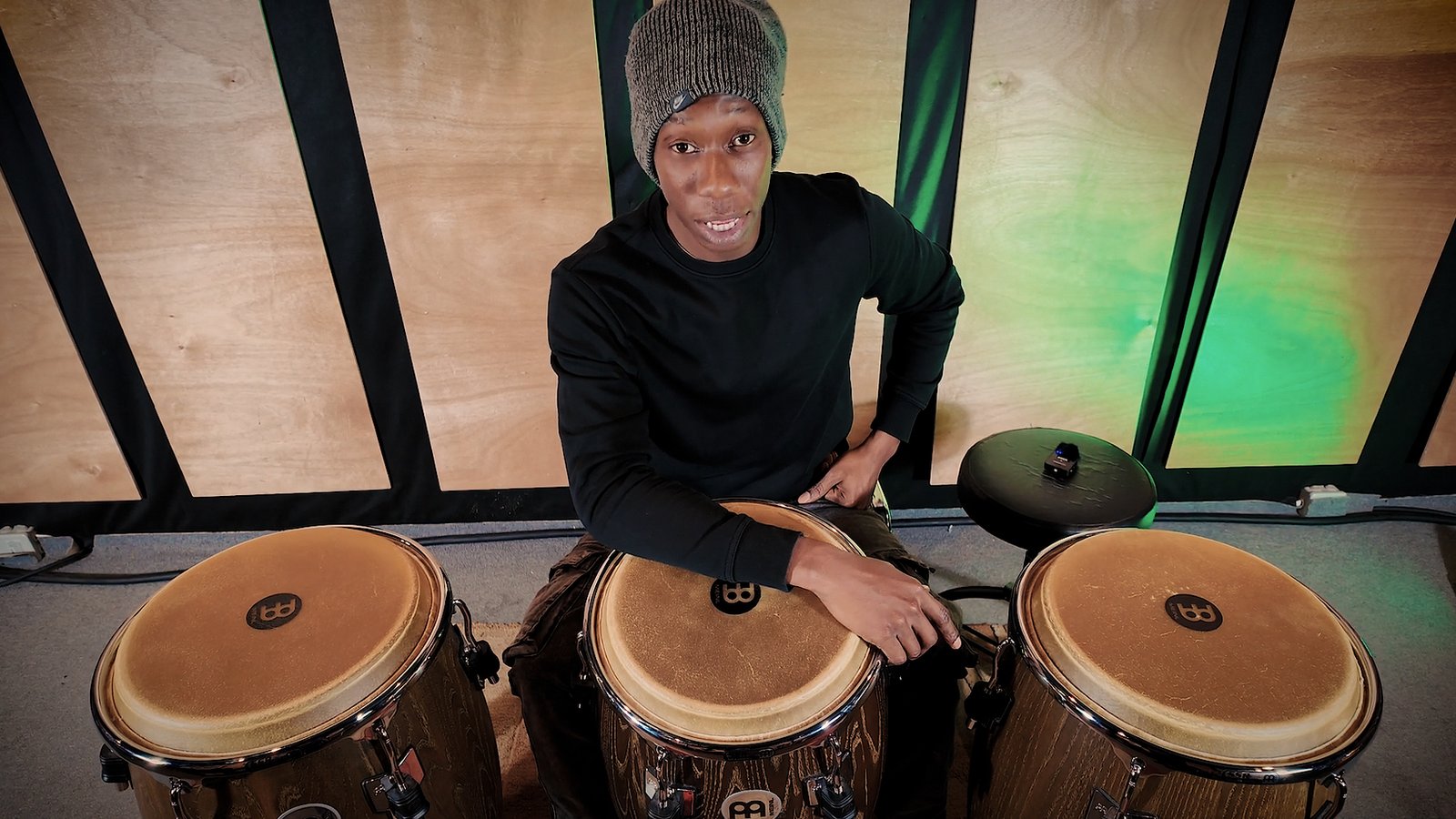
This course invites you to explore the essence of the tres‑dos within Cuban rumba. With Machito, you’ll discover how it was born, how it evolved into its modern form, and how to build a solid march before adding variations, combinations, and bass tones—always respecting the interaction with the tumbador and the quinto. Get ready to feel and play the tres‑dos as a living foundation of Guaguancó.

The Tres-Dos — Internal Harmony & Response in Rumba

What does the course cover?

  • History and function of the tres-dos: from its late arrival in rumba to its current placement inside the clave.
  • Differences between 3+2 clave and the 2+3 perception by resonance, with practical examples.
  • Construction of the tres-dos march: muted tones, open tones and the mazacote.
  • Hand techniques, control of the bass tone on the second stroke of the clave, and pulse cleanliness.
  • Variations, entrances and exits, combinations and space management with tumbador and quinto.
  • Integration of pressed tones and the influence of six-eight feel to enrich the rhythmic discourse.

Main ideas of the course

  1. Base first: the march is the soul; variations come later.
  2. The clave leads: the bass tone of the tres‑dos interacts with its second stroke and defines entrances and exits.
  3. Respecting the codes: the tres‑dos responds to the tumbador; you don’t vary without a call.
  4. Clarity over virtuosity: playing clearly matters more than playing a lot; evolution must respect the root

In this course, you will explore how to:

  • Anchor the tres‑dos in the 3+2 clave and count precise entrances: after the “four,” the “one,” or the “two,” without losing the flow.
  • Maintain a stable, clean march at any tempo, prioritizing clarity and projection of the muted tones.
  • Place the bass tone on the second stroke of the clave and achieve round open tones with controlled forearm and wrist.
  • Develop variations and combinations while respecting the codes: responding to the tumbador and leaving space for the quinto.
  • Integrate pressed tones and six‑eight feel to enrich the musical language without breaking the base or crossing the clave.

Key terms listed in the order they appear in the episodes.

  • Tres‑Dos: Drum pattern that interacts with the clave and sustains the rhythmic cushion of rumba.
  • Clave 3+2: Five‑stroke guiding pattern; in rumba always structured as three plus two (3+2), sometimes perceived as two plus three (2+3).
  • March: Continuous internal rhythmic cushion that supports the ensemble and maintains the groove.
  • Muted Tone (Tapado): Muted, dry stroke that gives clarity.
  • Open Tone (Abierto): Resonant stroke; round sound with forearm control.
  • Bass Tone (Bajo): A low-pitched stroke used as a structural anchor in the rhythm.
  • Entrance / Exit (Entrada / Salida): Moment to begin and return to the base without breaking the time.
  • Codes: Implicit rules of call‑and‑response between tumbador, tres-dos and quinto.
  • Call / Response: Interaction where the tumbador initiates a phrase and the tres‑dos answers within the structure.
  • Tresillo: Ternary grouping used in advanced variations; requires control to avoid crossing the clave.
  • Pressed Tone (Presionado): Sustained/pressed stroke that is neither fully open tone nor muted tone.
  • Six-Eight: Afro‑Cuban ternary influence used as a phrasing layer to add melodic color without altering the base pulse.
  • Variation: Rhythmic modification of the base pattern that must resolve correctly back into the march.
  • Combination: Linking two or more variations using open tones or transitions to create a continuous musical phrase.
  • Guarapachangueo: Modern style influenced by developments of the tres-dos; mentioned here as influence, not core content.

Starter:

1 course pass

€

9

/month

+ tax as applicable

Pro:

3 course passes

€

19

/month

+ tax as applicable

Master:

9 course passes

€

49

/month

+ tax as applicable

Elite:

Full acces to all courses

€

299

/year

+ tax as applicable

Course details
Duration 70 min
Episodes 5
Level Intermediate

Explore more courses

The Tres-Dos — Internal Harmony & Response in Rumba
70 min
5 eps.
Intermediate

The Tres-Dos — Internal Harmony & Response in Rumba

This course invites you to explore the essence of the tres‑dos within Cuban rumba. With Machito, you’ll discover how it was born, how it evolved into its modern form, and how to build a solid march before adding variations, combinations, and bass tones—always respecting the interaction with the tumbador and the quinto. Get ready to feel and play the tres‑dos as a living foundation of Guaguancó.

What does the course cover?

  • History and function of the tres-dos: from its late arrival in rumba to its current placement inside the clave.
  • Differences between 3+2 clave and the ‘2+3’ perception by resonance, with practical examples.
  • Construction of the tres-dos march: muted tones, open tones and the mazacote.
  • Hand techniques, control of the bass tone on the second stroke of the clave, and pulse cleanliness.
  • Variations, entrances and exits, combinations and space management with tumbador and quinto.
  • Integration of pressed tones and the influence of six-eight feel to enrich the rhythmic discourse.

Main ideas of the course

  1. Base first: the march is the soul; variations come later.
  2. The clave leads: the bass tone of the tres‑dos interacts with its second stroke and defines entrances and exits.
  3. Respecting the codes: the tres‑dos responds to the tumbador; you don’t vary without a call.
  4. Clarity over virtuosity: playing clearly matters more than playing a lot; evolution must respect the root

In this course, you will explore how to:

  • Anchor the tres‑dos in the 3+2 clave and count precise entrances: after the “four,” the “one,” or the “two,” without losing the flow.
  • Maintain a stable, clean march at any tempo, prioritizing clarity and projection of the muted tones.
  • Place the bass tone on the second stroke of the clave and achieve round open tones with controlled forearm and wrist.
  • Develop variations and combinations while respecting the codes: responding to the tumbador and leaving space for the quinto.
  • Integrate pressed tones and six‑eight feel to enrich the musical language without breaking the base or crossing the clave.

Key terms listed in the order they appear in the episodes.

  • Tres‑Dos: Drum pattern that interacts with the clave and sustains the rhythmic cushion of rumba.
  • Clave 3+2: Five‑stroke guiding pattern; in rumba always structured as three plus two (3+2), sometimes perceived as two plus three (2+3).
  • March: Continuous internal rhythmic cushion that supports the ensemble and maintains the groove.
  • Muted Tone (Tapado): Muted, dry stroke that gives clarity.
  • Open Tone (Abierto): Resonant stroke; round sound with forearm control.
  • Bass Tone (Bajo): A low-pitched stroke used as a structural anchor in the rhythm.
  • Entrance / Exit (Entrada / Salida): Moment to begin and return to the base without breaking the time.
  • Codes: Implicit rules of call‑and‑response between tumbador, tres-dos and quinto.
  • Call / Response: Interaction where the tumbador initiates a phrase and the tres‑dos answers within the structure.
  • Tresillo: Ternary grouping used in advanced variations; requires control to avoid crossing the clave.
  • Pressed Tone (Presionado): Sustained/pressed stroke that is neither fully open tone nor muted tone.
  • Six-Eight: Afro‑Cuban ternary influence used as a phrasing layer to add melodic color without altering the base pulse.
  • Variation: Rhythmic modification of the base pattern that must resolve correctly back into the march.
  • Combination: Linking two or more variations using open tones or transitions to create a continuous musical phrase.
  • Guarapachangueo: Modern style influenced by developments of the tres-dos; mentioned here as influence, not core content.

Starter:

1 course pass

€

9

/month

+ tax as applicable

Pro:

3 course passes

€

19

/month

+ tax as applicable

Master:

9 course passes

€

49

/month

+ tax as applicable

Elite:

Full acces to all courses

€

299

/year

+ tax as applicable

×

Your current Membership plan is ""

Course passes available: 0

You'll use 1 course pass to access this course.

Unlock with course pass

© 2026 MJ Events. All Rights Reserved.

Disclaimer: Educational content for personal use only. Individual progress may vary depending on personal practice and experience.

Welcome back

Manage Consent
La Clave de Barrio

We use cookies and similar technologies to ensure the proper functioning of our website, remember your preferences, and understand how the Service is used. You can choose which non-essential technologies you allow and change or withdraw your consent at any time.

Essential / Strictly Necessary

These technologies are necessary for the secure and proper functioning of the Service, including authentication, session management, security, payment processing, and video streaming.

Functional / Preferences

These technologies allow the website to remember your preferences and settings, such as language and interface preferences.

Analytics / Performance

These technologies help us understand how the Service is used, monitor performance and technical issues, and improve the reliability and usability of the platform.